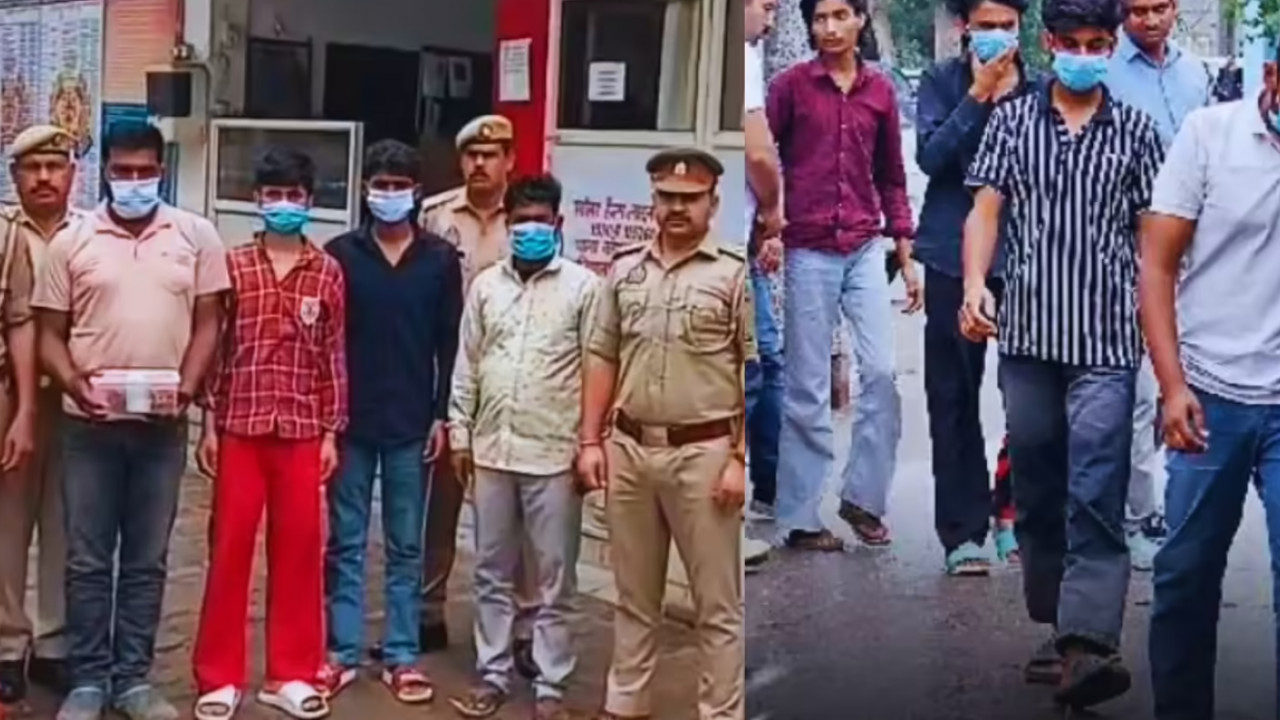
Major Espionage Racket Busted in Kaushambi, 9 Detained with Foreign Connections (Image Courtesy: Instagram)
Uttar Pradesh: An espionage network has been exposed in Kaushambi area of Ghaziabad, Uttar Pradesh, which has alerted the security agencies. After receiving information from the accused arrested earlier, the SIT intensified the action and detained 9 more suspects on Friday. The surprising thing is that 5 minors are also included in these.
Investigation has revealed that this entire gang was working in an organized manner. Everyone was connected through WhatsApp groups. Their job was to conduct reconnaissance of sensitive areas of the country like military bases, railway stations and important government establishments. After this, these people used to send photos, videos and location details to their masters sitting abroad.
During the action, police recovered 2 CCTV cameras, 9 mobile phones and 10 SIM cards from the accused. All these equipment was being used in espionage activities.
A major revelation during the interrogation was that the gang was planning to install CCTV cameras at about 50 different places in the country. It has also come to light that cameras have been installed at Delhi Cantt and Sonipat railway stations, which have been recovered by the police.
According to the investigating agencies, the wires of this network are not limited to Pakistan only. Its links have emerged till Dubai, Malaysia and UK. Suhail Malik's name has emerged as the main handler, while Naushad Ali and Sameer alias Shooter are also said to be associated with this network. At present all three are absconding.
The gang members used pre-activated SIMs, fake IDs and stolen mobile numbers. Different apps were used to share the location so that it could be difficult to track their activities.
In return for this work, the accused used to get Rs 500 to Rs 15,000. Instead of sending the money directly to the account, the money was transferred to the QR code of public service centers or shops, from where the cash was withdrawn. In some cases, money has also come to light through Hawala.
The gang specially selected such youth and minors who had basic understanding of mobile phones and technology. They were added through WhatsApp groups and gradually made a part of this network.
During investigation, indications of activities of this network have also been found in Delhi, Haryana and Maharashtra. After this, the agencies of these states have also become alert and the scope of investigation has been increased.
Police say the investigation is still ongoing and as new information emerges, more arrests are possible. The clues found from Kaushambi are proving important in understanding this entire network.





Copyright © 2026 Top Indian News